


Why Approved Premises Matter: Protecting Communities and Supporting Change
Ellie MacCarter, our Chief Officer for Operations, explores how Approved Premises (APs) play a unique role in protecting the public and helping people rebuild their lives after involvement with the criminal justice system.
When people hear the term Approved Premises, they often have misconceptions about what they are and the role they play. Some assume they’re simply accommodation for people leaving prison, while others think they’re an extension of custody.
The reality is very different.
For me, Approved Premises represent one of the best examples of how rehabilitation and public protection work hand-in-hand. They provide the structure, support and monitoring that people need to safely reintegrate into their communities, while ensuring risks are actively managed and the public remains protected.
A bridge between custody and the community
The role of an Approved Premises is to offer additional support, rehabilitation and monitoring for people in the community who pose a high or very high risk of harm and are involved with the criminal justice system.
Most residents have been released from prison, but Approved Premises can also support people serving community sentences, individuals on licence who are at risk of returning to custody, or people on bail where their ability to safely manage in the community needs to be assessed.
Approved Premises provide 24-hour staffed accommodation and a structured environment where people can begin rebuilding their lives.
Our teams actively monitor and manage risk through regular observations, curfews, sign-in times, drug and alcohol testing, room searches, structured sessions and keywork meetings. Just as importantly, we work closely with probation, police and other partner agencies, sharing information and taking a coordinated approach to risk management.
But monitoring is only part of our role.
“Every day we support residents to improve life skills, address offending behaviour, access healthcare and mental health support, work through trauma and develop the confidence and resilience they need to successfully reintegrate into the community. Approved Premises play a vital role in keeping both the public and the people living with us safe.”
Supporting people through the most important stage
The period immediately after someone leaves prison can be one of the most challenging times in their life.
While people can complete significant work to address their behaviour in prison, returning to the community brings a completely different set of pressures. They may suddenly have to manage finances, secure accommodation, access healthcare, reconnect with family, avoid negative influences or maintain recovery from substance misuse.
Without the right support, this period can carry a much greater risk of reoffending or the potential to cause harm.
“Approved Premises provide an important transition between custody and independent living. They offer structure and routine similar to prison, while giving people the opportunity to face the realities of everyday life in a safe environment where professional support is available.”
Residents can work through these challenges with experienced staff alongside access to essential services, while enhanced monitoring ensures risks are managed effectively during what is often the most critical stage of their journey.
Challenging misconceptions
One of the biggest misconceptions is that Approved Premises simply house dangerous offenders or are occupied entirely by Registered Sex Offenders.
The reality is far more nuanced.
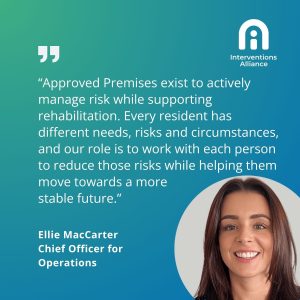
“Approved Premises exist to actively manage risk while supporting rehabilitation. Every resident has different needs, risks and circumstances, and our role is to work with each person to reduce those risks while helping them move towards a more stable future.”
From a resident’s perspective, another misconception is that an Approved Premises is simply another prison.
Whilst there are rules, structure and accountability, our role isn’t simply to enforce them.
We offer significant support and rehabilitative opportunities for people who are ready to engage with them. It’s about helping people make positive changes while ensuring the right safeguards are in place to protect victims and communities.
The difference small changes can make
Over the years, I’ve seen countless examples of people making positive changes during their time in an Approved Premises.
One of the most common is overcoming drug and alcohol misuse. This can be incredibly challenging, particularly when residents are all at different stages of their recovery journey. Someone may be working hard to maintain abstinence while another resident is struggling with relapse.
“Through consistent support, clear boundaries and the enforcement of the Approved Premises regime where necessary, many people leave having maintained a substance-free lifestyle throughout their stay. That provides an incredibly important foundation for the next stage of their lives.”
Sometimes, however, the biggest achievements are the ones that appear smallest from the outside.
I remember one resident with a long history of violence and aggression, much of which stemmed from significant trauma and finding it difficult to regulate her emotions. She often lived in a constant state of ‘fight or flight’.
During her time with us, she accessed Offender Personality Disorder services, mental health support and healthcare, alongside regular support from her keyworker.
Gradually, week by week, we saw incidents reduce. She became less hostile, engaged more positively with staff and developed healthier ways of responding when situations became difficult.
When she moved on, she left with practical coping strategies, ongoing support and increased confidence in managing her emotions. Those changes will not only improve her own wellbeing but significantly reduce the likelihood of future violence and harm.
Those are the moments that remind me why this work matters.
Why Approved Premises matter
Before joining Interventions Alliance, I worked as a Probation Officer and later in probation management roles, so I’d worked alongside Approved Premises teams for many years.
I could always see the difference they made.
As a Probation Officer, I might only see someone for an hour each week. Working within an Approved Premises gives colleagues the opportunity to really understand someone’s circumstances because they’re supporting them in their day-to-day environment.
That creates a much more personal approach, helping us understand not just what someone has done, but what has happened in their life, the barriers they face and how we can best support them to change.
“Some of the proudest moments of my career have been watching our colleagues recognised for the incredible work they do, including seeing one of our Approved Premises teams receive outstanding feedback from HM Inspectorate of Probation.”
Equally rewarding is hearing from former residents who take the time to tell us how they’re getting on. Those conversations demonstrate not only the progress they’ve continued to make, but also the lasting impact that the support they received had during a pivotal point in their lives.
Looking ahead
I believe Approved Premises have an even bigger role to play in the future.
There is enormous potential for them to support more people before risks escalate, particularly those already living in the community who may be facing homelessness, increasing substance misuse or other experiences that place them at greater risk of offending.
Expanding Approved Premises provision would mean more people could benefit from the structure, stability and rehabilitation they provide, helping reduce reoffending while giving individuals the opportunity to build stronger foundations for the future.
Above all, I would want people to understand one thing: Approved Premises are not simply a roof over somebody’s head.
They offer intensive rehabilitation alongside robust risk management and stringent monitoring. They provide people with the opportunity to change while protecting victims and keeping communities safe.
For me, they are one of the clearest examples of rehabilitation and public protection working hand-in-hand.