


Breaking the cycle of domestic abuse: why behaviour change matters
October is Domestic Abuse Awareness Month – an opportunity to talk not only about the devastating impact of domestic abuse, but also about what we can do to prevent it.
Our Behaviour Change Practitioners work with people who have caused harm in their relationships, helping them understand their behaviour, take responsibility for it and develop the skills to make different choices.
Zoe Fowle shares insight into a man she worked with, Alistair, as part of our 12-week Healthy Relationships intervention.
The starting point
Alistair came to me following his arrest for assaulting his wife. He had been highly intoxicated and, when he was shown photographs of what he had done, he was absolutely mortified.
His wife had fled to a refuge following the incident.
When Alistair first walked into my office, he was unshaven and dishevelled. He was clearly struggling with what had happened, but there was also a lot of self-pity. He was focused on what the incident had meant for him.
He began our Healthy Relationships intervention.
Looking beyond the incident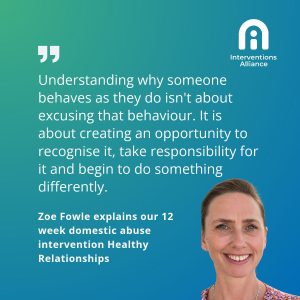
We didn’t just talk about what had happened that night. We explored his behaviour, his relationships, his thinking patterns and his experiences growing up.
He told me that he had never spoken about some of those experiences before.
There were times when he became very emotional. But gradually, I started to see a change.
It was visible in his appearance and in the way he carried himself, but more importantly, it was evident in the way he began to talk about his behaviour.
He started to take responsibility for what he had done. He wasn’t looking for excuses. He was beginning to understand the impact of his actions and what he needed to change.
At one point, he said to me: “Why hadn’t I known this stuff before?”
For me, that was an important moment. Understanding why someone behaves as they do isn’t about excusing that behaviour. It is about creating an opportunity to recognise it, take responsibility for it and begin to do something differently.
Change doesn’t guarantee a particular outcome
Alistair’s wife did not return to the relationship. I think that is an important part of his story.
Behaviour change is not about guaranteeing reconciliation or a particular outcome. It is about accountability, responsibility and making different choices.
At Christmas, Alistair contacted me to tell me that he was volunteering, serving lunches at a homeless shelter.
For me, that was a very powerful moment.
The man who had first walked into my office distressed, dishevelled and struggling to understand his own behaviour was now talking about what he could contribute to other people.
His story doesn’t erase the harm that was caused. It doesn’t change what happened to his wife.
But it demonstrates why intervention matters.
Why intervention matters
There is a significant human and economic cost to domestic abuse. The Home Office has previously estimated the cost to society at £66 billion, while more recent research by Women’s Aid has estimated the cost in England at £78 billion.
Those figures matter. But for me, the most important measures are much more immediate:
- Is someone safer?
- Is a child safer?
- Has another incident been prevented?
- Has someone who has caused harm understood what they have done and taken responsibility for doing something different?
These outcomes matter because behaviour change isn’t simply about completing a programme. It is about what happens afterwards – in relationships, in families and in communities.
Alistair puts it particularly well when he talks about what the intervention helped him see:
“You’ll see the real you, and then you’ll know what you can do about it.”
And then he says: “There’s help there, if you want it.”
I think that captures something important about behaviour change.
Breaking the cycle
Breaking the cycle of domestic abuse means holding people accountable for their behaviour while also creating genuine opportunities for them to change.
It means working together across policing, courts, specialist services and communities.
And ultimately, it means trying to make sure that we are not simply responding to the next victim of domestic abuse, but doing everything we can to prevent there being one.
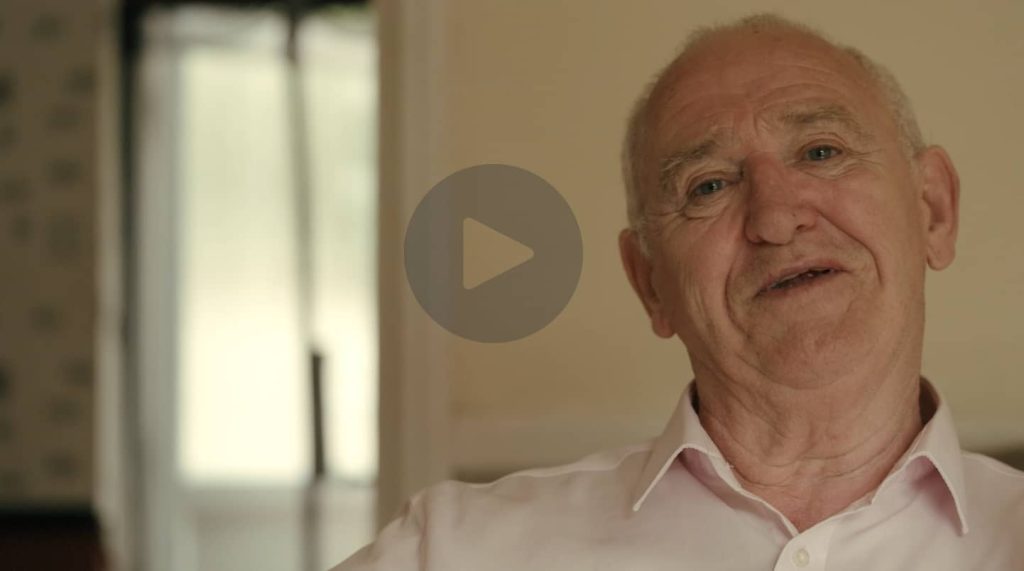
- You can hear Alistair talk about his experience of the Healthy Relationships intervention and what it helped him understand by clicking on this video.