


From prison service to behaviour change: Clare’s career journey
What does a career in behaviour change look like, and what can it offer you? For Clare Rowswell, it has meant building on years of experience in the criminal justice system, developing new skills and helping people work towards meaningful change.
Clare’s interest in crime and the criminal justice system began early. At 18, she went on to study Criminology at university, before starting her career as a Prison Officer.
“I thoroughly enjoyed the role,” Clare explains. “It gave me a valuable insight into the experiences and challenges faced by people within the prison system.”
Although she found the work rewarding, Clare realised she wanted to do more to support people to make positive changes in their lives. She moved into resettlement support, helping people prepare for release and navigate their transition back into the community.
From there, Clare supported the opening of a new prison in London, progressing into roles within the Offender Management Unit and eventually becoming a Resettlement Manager, responsible for services across three prisons.
After many years working in prisons, Clare felt ready for a new challenge in the community. Almost five years ago, she applied to become a Behaviour Change Practitioner (BCP) at Interventions Alliance.
She hasn’t looked back.
Understanding what drives behaviour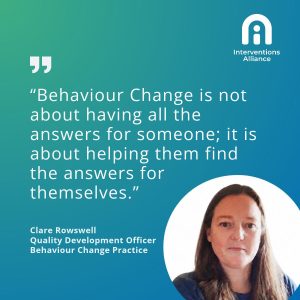
For Clare, one of the most rewarding aspects of behaviour change work is helping people understand their actions and recognise the impact they can have on others.
People can struggle to change for many reasons. Some may not fully recognise the consequences of their behaviour. Others may understand that something needs to change but feel unsure where to begin. Asking for help can be difficult, and motivation can take time to develop.
“It’s about meeting people where they are, helping them to understand their behaviour, supporting them to recognise the impact of their choices, and giving them the skills and confidence to make positive and lasting changes.”
This requires more than simply telling someone what they should do differently. BCPs help participants explore the reasons behind their behaviour, identify their own reasons for change and practise new ways of responding.
As Clare explains, the practitioner cannot make the change for someone else. Instead, they help create the conditions in which a person can begin to understand themselves and make different choices.
Building trust while supporting accountability
Trust is an important part of this process. People may initially feel reluctant to engage, particularly if they have had difficult experiences with professionals or are being asked to explore uncomfortable aspects of their behaviour.
Clare believes that a respectful, non-judgemental and supportive approach can help people feel able to speak openly. As trust develops, they may become more willing to examine their thinking, consider the impact of their actions and explore different ways of responding.
That does not mean avoiding difficult conversations. Effective behaviour change work combines listening and understanding with appropriate challenge, clear boundaries and accountability.
It is a collaborative process. Practitioners provide guidance, support and opportunities to develop new skills, while participants need to reflect on what they learn and practise applying it in their everyday lives.
Why small steps can make a big difference
Meaningful change does not always happen in dramatic or immediately visible ways.
For Clare, it might be a participant pausing to think before answering a question, rather than responding as they would have done previously. It could be someone sharing that they have used a skill from a session during a difficult situation at home, or recognising the progress they have made towards a personal goal.
“These moments may seem small to someone looking from the outside, but to the person making the change, they can be significant achievements.”
Recognising these steps is one of the rewarding parts of the role. Change looks different for everyone, and progress can begin with a new insight, a different response or a willingness to consider another perspective.
Clare has also learned the importance of looking beyond assumptions about people.
“What we see on paper about a person does not always tell the full story of who they are or why they have behaved in a particular way.”
Understanding the person behind the behaviour is not about excusing harm. It is about exploring what has contributed to someone’s choices while supporting them to take responsibility and consider what they can do differently.
A career that keeps developing
Over the past five years, Clare has seen the BCP role and the wider Behaviour Change service evolve. She has also developed alongside it, building on her previous experience while gaining new knowledge and skills.
She has now progressed from BCP to Quality Development Officer, a development she is particularly proud of.
Her journey illustrates how a career in behaviour change can offer opportunities to learn, broaden your expertise and progress into new areas of responsibility.
For Clare, the work remains rewarding because it offers the opportunity to support people to develop insight, build confidence and make choices that can help reduce further harm.
“People can change, and being part of that journey is incredibly rewarding.”
Could behaviour change be your next career?
You may already have skills that could provide a strong foundation for becoming a Behaviour Change Practitioner. Experience in criminal justice can be valuable, but so can skills developed in psychology, social care, mental health, education, youth work and other people-focused roles.
The work calls for curiosity about human behaviour, the ability to build relationships, confidence in having difficult conversations and a commitment to supporting change while keeping safety in focus.
At Interventions Alliance, you can continue to develop your skills and explore opportunities to grow professionally.
Interested in a career as a Behaviour Change Practitioner? Take a look at our latest vacancies and learn more about the role, the skills involved and opportunities to join our team.