

Beyond the abuse: why safety and connection matter for male survivors of domestic abuse
For International Men’s Day, and as Mankind UK brings together professionals at its annual conference on Supporting Male Victims of Domestic Abuse, we explore the barriers men can face when seeking help, the impact of loneliness and isolation, and the importance of specialist support in rebuilding confidence and connection.
Domestic abuse can affect anyone, regardless of gender. Yet for men experiencing abuse, recognising what is happening and feeling able to ask for help can bring additional challenges.
Fear of being judged, not being believed or feeling that their experiences will not be taken seriously can make it difficult for male survivors to speak openly. Some may feel unable to express their emotions or reach out to friends and family, leaving them increasingly isolated at a time when support is most needed.
For those who leave an abusive situation, the challenges do not necessarily end when they reach safety. Relocating at short notice, often away from familiar surroundings and support networks, can bring a further sense of uncertainty and loneliness.
We recognise that providing safe accommodation is an important first step, but rebuilding a sense of security, confidence and connection takes time.
The impact of loneliness and isolation
For men who have experienced domestic abuse, isolation can take many forms. They may have lost contact with friends or family, feel unable to talk about what has happened or worry that others will judge their experiences.
The stigma that can surround male experiences of domestic abuse can make these feelings particularly difficult to navigate.
Lauren Noya, our Specialist Domestic Abuse Support Worker, explains:
“For male survivors, the perceived taboo surrounding domestic abuse against men, alongside fear of judgement or not being believed, can all contribute to feelings of loneliness.”
Moving into refuge accommodation can also mean leaving behind familiar places, routines and relationships. While this can be an essential step towards safety, adjusting to a new environment and building connections with people around them can take time.
It is important to recognise that everyone experiences this transition differently. Some people may want to talk about what has happened, while others may need time and space before they feel ready.
Rebuilding confidence, one step at a time
Supporting someone through loneliness and isolation is not simply about providing somewhere safe to stay. It is also about helping them regain confidence, explore opportunities and begin to feel connected to the world around them again.
At Interventions Alliance, this can involve supporting residents to access employment-focused workshops, attend support groups or take part in everyday activities, such as visiting a café. These opportunities can help people develop new connections, build confidence in social situations and begin to establish routines.
As Lauren explains:
“We aim to support male survivors by empowering them to explore new experiences and opportunities. Taking part in these activities can help foster a sense of community and build confidence in everyday interactions. Normally, it is the small steps a survivor takes that contribute to a large difference.”
These steps might seem small from the outside, but they can represent significant progress for someone who has experienced abuse, lost confidence or become disconnected from others.
The difference a safe environment can make
For one male resident at an Interventions Alliance refuge for men, arriving marked the beginning of a very different experience.
Reflecting on his first day, he described how he was feeling:
“Unsafe, nervous, unsure, far away from family – just depressed.”
But he also spoke about how things began to change during his first few days:
“These feelings changed over the next few days. I began to feel more safe, more sure and more motivated. The rest I know will take time to work at, but I am definitely in a better place.”
Access to conversations, counselling and practical opportunities has helped him begin to look ahead. He particularly valued having someone to talk to and the opportunity to discuss his feelings and challenge negative thoughts. He is also preparing to attend an employment course, taking another step towards building his future.
His reflection captures the importance of both immediate safety and the ongoing support that follows:
“Basically, the refuge has saved me when I needed saving. I love the safety it provides and the people who have supported me.”
His experience is a reminder that recovery does not happen all at once. Feeling safe can create the space to begin rebuilding, but confidence, connection and a sense of direction develop over time, with the right support.
Recognising the importance of specialist support
Supporting male survivors requires an understanding of the different barriers they may face, alongside a commitment to listening without judgement and recognising each person’s individual needs.
For colleagues working in refuge services, this also means recognising the emotional demands of the role, maintaining resilience and being aware of the importance of their own wellbeing.
For Lauren, one of the most rewarding aspects of the work is seeing residents move forward from refuge into secure accommodation, having had the opportunity to rebuild some of the confidence and independence that abuse may have affected.
She also has an important message for any man who may be experiencing domestic abuse but feels unsure about seeking help:
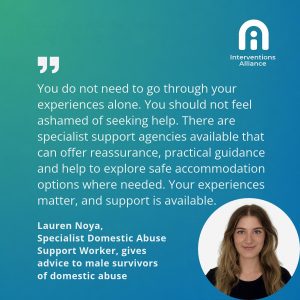
“You do not need to go through your experiences alone. You should not feel ashamed of seeking help. There are specialist support agencies available that can offer reassurance, practical guidance and help to explore safe accommodation options where needed. Your experiences matter, and support is available.”
Everyone deserves to feel safe
International Men’s Day provides an opportunity to recognise the experiences of male survivors of domestic abuse and challenge assumptions that can make it harder for them to seek support.
It is important that men know domestic abuse is not something they have to face alone, and that asking for help is not a sign of weakness.
- If you need immediate support Help For Male Victims – ManKind Initiative
- For professionals supporting male survivors who need safe accommodation, Interventions Alliance offers dedicated male-only shared accommodation at Lumen House, as well as all-gender provision at Asha House and Phoenix House. Please visit our contact page to find out more about our services and referral arrangements.