

Beyond the activities: Why relationships are at the heart of rehabilitation in Approved Premises
When people think about rehabilitation in an Approved Premises (AP), they often imagine formal interventions, appointments and risk management.
Those things are all important. But according to Lead Practitioner Ahmed Alani, it’s often the everyday moments that create the greatest opportunities for change. 
“A game of pool. Looking after a garden. Cooking together. Walking a therapy dog. On the surface they might look like ordinary activities, but underneath there’s a much deeper purpose.”
As Lead Practitioner across Ozanam House and St Christopher’s House in Newcastle, Ahmed helps staff understand residents’ needs through a psychologically informed approach. His role combines supporting residents directly with helping colleagues think differently about risk, relationships and rehabilitation.
Looking beyond behaviour
Before joining Interventions Alliance, Ahmed worked as a Clinical Practitioner supporting people with learning disabilities and neurodivergent conditions who had been in contact with, or were at risk of entering, the criminal justice system.
That experience continues to shape the way he approaches his work today.
“Many people leaving prison have experienced trauma, adverse childhood experiences, unmet needs or undiagnosed conditions that have influenced how they understand themselves, relate to others and respond to difficult situations.
“That doesn’t remove accountability for their actions, but it does help us understand that behaviour has context. When we understand that context, we’re in a much stronger position to support meaningful change.”
For Ahmed, Approved Premises occupy a unique place within the criminal justice system.
“People are leaving prison, adjusting to life in the community, rebuilding routines and trying to imagine what their future could look like. If that time is used well, within a safe and structured environment, there is a real opportunity to make a positive difference while also contributing to safer communities.”
More than somewhere to stay
One of the biggest misconceptions Ahmed encounters is that Approved Premises are simply accommodation, or an extension of prison.
“They’re neither. They’re structured, supervised environments where people are supported to live safely in the community while working towards moving forward.”
Every day begins by checking how residents are settling in, understanding any emerging risks and spending time talking with people informally.
Sometimes, those conversations happen in unexpected ways.
“If someone is struggling, they may not feel ready to sit down and have a formal conversation. Offering a game of darts or joining them for an activity can create a much more natural opportunity for someone to open up.”
Alongside one-to-one therapeutic work, Ahmed also supports a wide range of rehabilitative activities designed to help residents build confidence, relationships and practical skills.
 Why activities matter
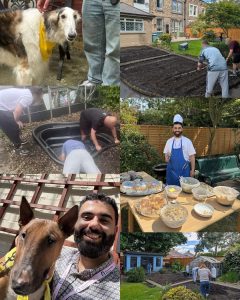
Whether it’s gardening, cooking, community visits, pool tournaments or spending time with therapy dogs, Ahmed is clear these activities are much more than simply keeping people occupied.
“Rehabilitation isn’t just about formal programmes or therapy sessions. Life in the community is built around routines, relationships, interests and everyday experiences.
“Activities help residents imagine what that life could look like beyond prison.”
Planning those activities begins with listening.
“We ask residents what they’d like to do, but we also encourage staff to bring their own interests and skills into the AP. That makes activities feel authentic and helps build genuine connections.”
The impact can be significant.
Ahmed recalls one resident describing a therapy dog session as the most comfortable they had felt since leaving prison. Gardening has helped residents develop confidence and pride through creating something together, while something as simple as a game of pool has helped people open up about challenges they had previously kept to themselves.
“Sometimes success is simply someone leaving their room and joining an activity for ten minutes when they normally wouldn’t. That might seem small, but it can be a huge step.”
Seeing the person, not just the offence
At the heart of Ahmed’s approach is a simple principle: people are more than the worst thing they have ever done.
“It can be easy to form an opinion after reading someone’s history, their risks and previous behaviour. But paperwork rarely captures the person behind it – their strengths, humour, anxieties, hopes or potential for change.”
That doesn’t mean ignoring risk.
“Risk is something we take seriously every day. But it’s only one part of understanding someone. Alongside accountability, empathy is essential if we’re going to support meaningful rehabilitation.”
For Ahmed, one of the most rewarding aspects of the role is seeing people gradually grow in confidence.
“Sometimes the biggest changes aren’t dramatic. It might be someone asking for support when they previously wouldn’t, managing a difficult situation differently or beginning to believe that things can be different.”
A career that changes you too
Ahmed believes Approved Premises also change the people who work there.
“The longer you work in an AP, the more you begin to understand people beyond the offence or the label. You develop your communication, patience, professional judgement and understanding of risk, but you also grow as a person.”
His advice for anyone considering a career in an Approved Premises is not to rule themselves out because they don’t have a traditional criminal justice background.
“There isn’t one ‘right’ type of person for this role. Some of the most important qualities are empathy, curiosity, reflection and a willingness to learn.
“If you’re someone who wants to understand people, work as part of a supportive team and make a genuine difference to people’s lives while contributing to safer communities, it’s an incredibly rewarding career.”
Ahmed sums up his role in three words: Relational. Learning. Rewarding.
Because ultimately, rehabilitation isn’t only about managing risk. It’s about creating opportunities for people to build the confidence, skills and relationships they need to move forward.