

Domestic abuse has no gender: Why male survivors need to be heard and supported
For men experiencing domestic abuse, recognising what is happening, finding the confidence to speak out and accessing appropriate support can all present significant challenges. This Supporting Male Victims of Domestic Abuse Day, Interventions Alliance is highlighting these challenges and the importance of ensuring men have somewhere safe to turn.
When we talk about domestic abuse, the experiences of male victims can sometimes be overlooked. Stereotypes about gender, physical strength and relationships can make it harder for men to recognise abuse, disclose what is happening and feel confident that they will be believed.
The scale of the issue is significant. According to Mankind, only one in 23 victims accessing specialist support from their local commissioned domestic abuse service (community-based outreach and IDVA services) is male.
Behind that statistic are men who may be experiencing coercive control, intimidation, emotional, financial or physical abuse, but who can face additional barriers when trying to find help.
The fear of not being believed
For one of our colleagues, what began as a loving relationship gradually became controlling. Over time, he found himself taking responsibility for almost everything at home, with little room to express his own needs or make decisions without risking an argument.
His partner’s behaviour became increasingly controlling and unpredictable. He began changing how he acted, carefully considering everyday decisions to avoid conflict. Threats, intimidation and emotional and financial pressure gradually undermined his confidence and left him questioning himself.
His partner also threatened to harm herself if he did not do what she wanted.
As a man experiencing abuse, he was frightened that people would not believe him or recognise what was happening as domestic abuse. He worried that others might assume he should be able to deal with the situation himself, or that his physical strength would mean his experiences were viewed differently.
These assumptions can make it harder for male survivors to speak out. Abuse is not less serious because the person experiencing it is a man, or because the person causing harm is a woman. Coercive control, intimidation and emotional abuse can have a profound and lasting impact, regardless of gender.
Finding support shouldn’t be another battle
When the relationship ended, our colleague was still living in the same house as his former partner. He needed help to understand what had happened, consider how to keep himself safe and work out what to do next.
But finding support proved difficult. He experienced an exhausting cycle of calls and referrals, with services directing him elsewhere. A local service supporting female victims apologised that it could not help him and did not know of a suitable local service for men.
Eventually, someone listened, acknowledged what he had experienced and offered practical advice about safety. But the service did not cover his area, meaning he could not access ongoing support.
His experience highlights the postcode lottery that male survivors can face when trying to find specialist help.
Our domestic abuse support worker Lauren also highlights the isolation that can affect male survivors:
“I have noticed with supporting male survivors they are a lot more isolated. They are not as motivated as women survivors to join groups or get support with talking and processing the abuse they have experienced.”
Every survivor’s experience is different, and support needs to recognise that people may feel differently about talking, joining groups or seeking help. For some men, isolation, stigma or uncertainty about whether a service is intended for them can make taking that first step particularly difficult. Building trust and offering different ways to access support can make a real difference.
For our colleague, supportive friendships, volunteering and reconnecting with interests helped him begin to rebuild his confidence. Although he is now married, the experience has had a lasting impact, affecting how easily he expresses his feelings and sometimes leaving him anxious in places associated with his former relationship.
His story is a reminder that leaving an abusive relationship does not necessarily mean the effects of abuse disappear.
Read a Story of Hope – one man’s experience of domestic abuse
A safe place for male survivors
Everyone experiencing domestic abuse deserves to be heard, believed and supported. Having somewhere safe to stay can be a vital first step towards rebuilding security, confidence and independence.
At Interventions Alliance, Lumen House provides dedicated, male-only shared refuge accommodation for men experiencing domestic abuse. It is one of the few services of its kind in the country, offering male survivors a safe place to stay and access support.
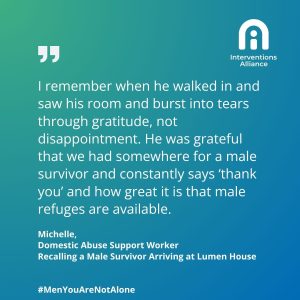
Lumen House domestic abuse support worker Michelle recalls the impact this provision can have:
“I remember when he walked in and saw his room and burst into tears through gratitude, not disappointment. He was grateful that we had somewhere for a male survivor and constantly says thank you and how great it is that male refuges are available.”
Our accommodation options for men are not limited to Lumen House. Men experiencing domestic abuse can also access our all-gender refuges, Asha House and Phoenix House, which provide self-contained accommodation.
Together, these services help ensure that men experiencing domestic abuse have more options when they need somewhere safe to go. For many, finding appropriate accommodation can be a significant barrier to leaving an abusive situation. Having a safe place to stay, alongside access to support, can offer the space and stability needed to consider next steps.
Helping more men come forward
Supporting Male Victims of Domestic Abuse Day, led by Mankind, is an opportunity to challenge assumptions, raise awareness and encourage more men to recognise abuse and seek support.
It is also a reminder to those around them to listen without judgement or assumptions. A man who discloses abuse may have spent a long time questioning what is happening, worrying about how others will respond or feeling that there is nowhere to turn. Being listened to and taken seriously can be an important first step.
Domestic abuse can affect anyone. Everyone deserves to be safe, to be heard and to be supported.
- For professionals supporting male survivors who need safe accommodation, Interventions Alliance offers dedicated male-only shared accommodation at Lumen House, as well as all-gender provision at Asha House and Phoenix House. Please visit our contact page to find out more about our services and referral arrangements.
- If you have been impacted by this article, you can also reach out to our partners ManKind for support.